


How to Raise a Well-Behaved Child: Important Tips to Follow
Key Takeaways
- Children can more easily learn how to behave well through positive discipline than through punishing behavior.
- To create good behavior in children, parenting is a proactive process of showing and role-modeling desired behavior.
- By having simple, clear rules, parents know where they are heading, and so do the children, and they are likely to respect those rules.
- By doing simple household responsibilities or chores, for example, after meals, children can become well-behaved, independent people.
- Parents must provide children with appropriate guidance so that they can manage their anger and prevent physical aggression in the house.
- Children can better listen to others if parents provide a listening ear and encourage appropriate communication by being patient listeners and modeling positive communicative practices.
Many parents struggle to discover the best parenting practices for disciplining their children. Most discipline tactics rely on either excessive or no punishment. It's natural to grow frustrated when these techniques don't work. Raising a well-behaved child is now a dream for many parents.
If you're having trouble disciplining your child, parenting tips and advice for babies, toddlers, and kids are here for your rescue. Here are six tried-and-tested methods to raise a well-behaved child like a pro (even if you're starting).
How to Raise a Well-Behaved Child?
Let's explore 9 important tips that will help you learn "how to raise a well-behaved child":
1. Punishment and Reward
When it comes to disciplining a child, most parents feel that punishing is the most effective method. They are often victims of guilt after punishing their children out of frustration and anger. Child psychologists worldwide have come up with effective advice on how to teach a child to behave responsibly without punishment.
According to the experts, terror as a means of raising a child is not an appropriate parenting method. There is a probability that your children may become rebellious due to severe punishment, and that is something you do not want to happen. Punishment is necessary, but it does little to teach the child how to behave better.
Parents must keep their children safe and guide them toward safe and suitable conduct. Meeting such objectives necessitates the establishment of a stable connection as well as the implementation of age-appropriate punishment. When most parents think of punishment, they think of time-outs, grounding, denial of certain rights, and so on. However, research regularly demonstrates that positive discipline is typically more successful, focused on teaching and gaining incentives or rewards rather than avoiding punishment.
2. Proactive Discipline Works Best
While this technique requires more time and work, it is still the best way to attain your goal. Make time to concentrate on changing your child's behavior. They will ultimately cherish what you teach them if you are hands-on. To be an effective parent is not about controlling a child or changing the child's personality to conform to a predetermined image of what defines a "good kid."
It's not enough to tell your kids what you want them to do; you also have to work with them until they fulfill those requirements. To truly grasp the child's unique set of demands, parents go out of their way to be receptive and understanding. For example, teach them by example instead of telling the child that they won't be going out with you to a party if they misbehave.
3. Setting the Ground Rules
When making rules for your children, try to be as consistent as possible in their implementation and reinforcement. The rule is more likely to be obeyed when parents establish solid routines that reinforce it. One of the best parenting strategies is to explain the guidelines for appropriate behavior. Make sure you are consistent in all scenarios and make no exceptions.
Children are more inclined to follow a rule if they know it is unbreakable. Parents should remember that if the rules aren't explicit enough, kids will find additional excuses to resist you and justify their poor conduct with loopholes.
4. Teach Appropriate Table Manners
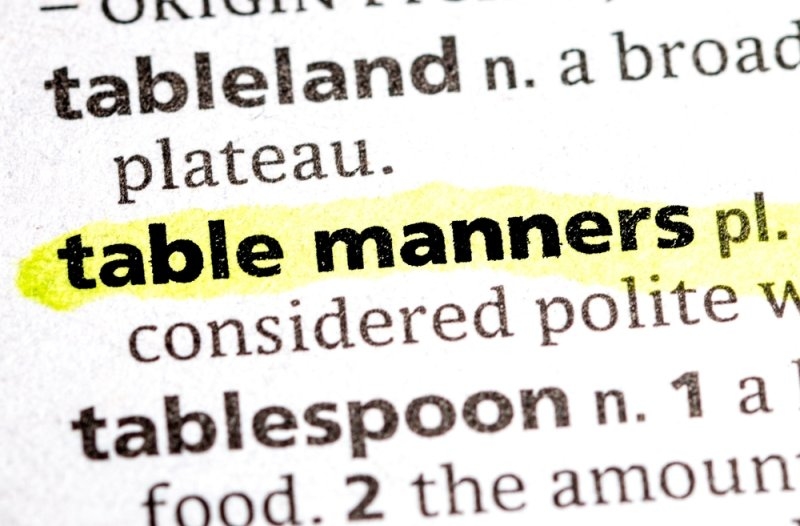
Instruct and advise your children to bring their dishes and cutlery to the kitchen after meals to instill the habit of cleaning up after themselves. Keep the cutlery and plates child-friendly; use lightweight plastic ones to make them accessible to carry to the sink. A child may be discouraged from
completing the task if the tasks are overly difficult for them to do. This similar ability may be used to teach them how to put their toys away at the end of the day and how to take off and put their shoes in the cupboard when they come back home.
5. Mind Their Physical Aggression
Suppose you know your child has a propensity to be physically violent. In that case, it is critical that you warn them ahead of time that you will not accept any hitting or pinching behaviors. If this occurs, you will take the child back home. If you don't follow through on your warning, your child will not take you seriously for this or any other thing in the future.
Also, teach your kids simple tactics for coping with anger, such as stepping away to cool off or requesting an adult for assistance when dealing with an obstinate youngster or when faced with bullying at school.
6. Sharpen their Listening Skills
Children are inherently lively; they are boisterous, noisy, and hyperactive. This makes it difficult for them to follow directions. Improve their active listening skills by modeling the behavior you want them to exhibit. Pay attention when they talk to you. Maintain eye contact and put any distractions aside. Allow them the opportunity to express themselves in the manner they are.
A child has a limited vocabulary at a small age, so be patient when trying to find the correct words. Interrupting children when they speak will make them feel like you don't regard their thoughts. Also, if they interrupt you while chatting, explain that it's impolite. You made it a point to allow them to talk freely, so now it's their turn.
Conclusion
As parents, we dream of raising kids who are polite and compassionate in nature. We like the kids to smile at their elders and say "please" and "thank you." We want them to behave appropriately at parties and in shopping malls, and we see them as proof of our parenting skills.
While it is true that some children are more sensitive than others, parents hence have to understand the needs that are specific to their children. Good etiquette may help your child in numerous ways, for example, building strong relationships with their peers.
So set an example for your kid. If you don't use words like "please" and "thank you," your child won't either. Use these parenting tips to learn how to raise a well-behaved child and build a healthy relationship with your child.
Frequently Asked Questions
How can parents discipline effectively without excessive punishment?
Parents can establish an environment of positive discipline, which requires stating expected behaviors, noticing desirable behavior, and providing sensible consequences for negative actions. Parents should aim to teach their children better choices as an alternative to depending upon threats or strict penalization.
Why should kids abide by regular rules?
Regular guidelines help young individuals acquire understanding and knowledge of desired behaviors. When parents administer regular limits, kids typically develop less complicated than usual; it is confusing about what is a result of them, and they also have the tendency to become acquainted with a normal.
Just how can moms and dads show good manners?
Parents can demonstrate positive manners through the process of showing kids good examples or by having children practice simple things in day-to-day situations, such as saying "please" as well as "thank you" as often as possible, cleaning up after meals, and keeping the home tidy.
When a kid hits, pinches, or uses his/her physical self irrationally, what should a mom and dad do?
Parents should obviously communicate that the kid cannot be hostile, hit, or pinch any person. They also should teach healthier methods of working with frustration, like leaving, taking a break, and, as a final resort, finding out ways to ask an adult to help.