


Tips for Flying With a Baby for Stress-Free Plane Travel
Key Points
- Feeding your baby on the plane usually keeps them calm.
- Bringing their favourite blanket or toy gives them a sense of home, even somewhere new.
- If you check travel requirements before you go, you won't get caught off guard.
- Honestly, if your baby's comfortable, the trip goes smoother for everyone.
- And a little fussiness? That's normal. Don't stress or expect perfection.
- Sometimes fellow passengers are surprisingly helpful-so accept their support when you need it.
Flying with your infant can be a nerve-wracking experience. The noise, the confined space, and the risk of catastrophe all add to a stressful day. However, it's not all bad. As usual in life, the negative aspects are almost always outweighed by the positive ones. Flying with your baby allows you to spend quality time together before returning to work and school.
You also see new places and explore others from an aerial perspective. Because there are bound to be more downs than ups when travelling with your infant, we've compiled some practical tips for flying with a baby on board.
Understanding Flying With a Baby: Why They Cry on Aeroplanes
Most people know that a baby doesn't just cry to annoy the parents; instead, the infant is trying to communicate some sort of need or desire, and crying is the only instrument available. Having a baby teaches you so fast that they scream frequently. Or, there are stages of growth where crying is more prevalent. Wails and tears are universal expressions of distress, weariness, hunger, loneliness, boredom, rage, pain, and other negative emotions.
Also, the crying may get rather loud at times. In most cases, only a child's parents or caretakers would hear and react to their screams. But aboard a crowded flight, you're not alone in feeling anxious. Believe me, the last thing you need, as a parent, at that moment is snide remarks, eye rolls, or loud sighs. Immediately attending to your baby's needs is the top priority.
Tips for Flying With a Baby On a Plane
Here are some essential tips for flying with a baby to survive in aeroplanes:
Get to the airport early.
In general, you should allow yourself two hours to navigate from your house to the airport - even if you're flying out of a local airport. If you're visiting an international destination, you should give yourself even more time to get there, just in case there's a traffic delay or you run into any other problems. While you avoid being late for your flight, you also don't want to rush your infant. Remember that babies and toddlers often have shorter attention spans than adults.
If you rush through the airport and have to stop to change or feed your baby five times, you're likely to run out of time before you even board the plane. So, ensure that you have extra time on your hands to make your little one feel comfortable.
Bring Toys, Books, and Other Distractions
Flying with a baby is bound to be stressful for you and your infant. If you're lucky, your infant will sleep through most of the flight, but don't count on it. Even if your infant is a little angel who sleeps like a log, you'll probably find yourself a bundle of nerves. To help pass the time and keep yourself calm, bring some toys and books for you and your infant to play with and read.
You can also ask the airline for some extra toys for your infant to play with. While waiting to board, check out the airline's website and peruse their suggested reading materials. This will give you something to do before your flight and a chance to learn about the airline's offerings.
Check If The Stroller Is Allowed On Board
Most airlines allow you to bring your infant on board in a car seat or stroller, but every airline has rules and regulations. Before you leave for the airport, make sure that your stroller is allowed on board.
Ensure your car seat complies with airline regulations if you want to use it after you get to your destination. You may rent one at the airport if you don't bring a car seat.
Note: You're welcome to bring your car seat onboard, but the airline won't help you set it up in the cabin's centre seat.
Pack Lightly
Newborns and infants are generally content to be held, fed, or changed, so you don't have to worry about them getting bored and becoming disruptive. However, they can also be fussy at the best of times, so you don't want to weigh them down with too much stuff. Make sure that you pack light and only bring the essentials.
Before you leave for the airport, pack everything you'll need for your flight and beyond into a small bag or tote. Ensure that any liquids you plan on taking are less than 100 ml and that all necessary documentation is easily accessible. Once you're at your destination, you'll have less to carry.
Dress Your Baby In Layers, Including Socks, Shoes, and a Hat
You'll almost certainly want to dress your infant in layers during the cooler months. This will help keep him warm and comfortable and keep him from overheating in the enclosed space of an aeroplane. Make sure that your infant has a hat on board, as well as thick socks and shoes.
Even if your infant is currently in his first pair of adorable baby shoes, you don't want them to be out of them once you're airborne.
Take Professional Opinion
Leisha Poage, a flight attendant for United Airlines for the past 12 years and a new mother of twins, offered her advice on approaching this circumstance as a fellow traveller. Communicating with the children might involve asking them questions, singing to them, or even talking to them.
Poage also suggested investing in some quality noise-cancelling headphones and giving the parents a break if you'd instead not become involved. She further advised that passengers could approach a cabin attendant for help if it didn't work.
Feedback From Frequent Travellers
Most of the time, all other passengers need to do to appease frantic parents is not to make things any worse. Put on those noise-cancelling headphones and ease up on the parents, as Poage advised. Of course, there may be other proactive methods you may use to aid the situation and, in turn, help quiet the crying infant, but this is the most general suggestion.
If a parent is in the middle, offer them a seat on an aisle. Leaving your seat between two total strangers and moving to the aisle where you'll have some breathing room may make a difference. Don't feel obligated to give up your seat. However, this is one option to consider if you want to do something useful.
Put a Smile On Someone's Face Or a Kind Word In Their Ears
Simple gestures of comfort like a grin, nod, or encouraging remark may go a long way toward calming a fussy parent and their young child during a flight. Knowing that it's a common experience and things will (eventually) improve may help parents relax and attend to their wailing baby.
Involve Yourself Directly and Help Out
Do not be hesitant to provide genuine assistance if you can do so. Maybe you may buy the child's silence by offering toddler-friendly food or a toy. Or, if the parent is the lone adult travelling with the child or children, they may be relieved to have someone else try to quiet the infant. A kind offer of assistance, should it be needed, is never out of place.
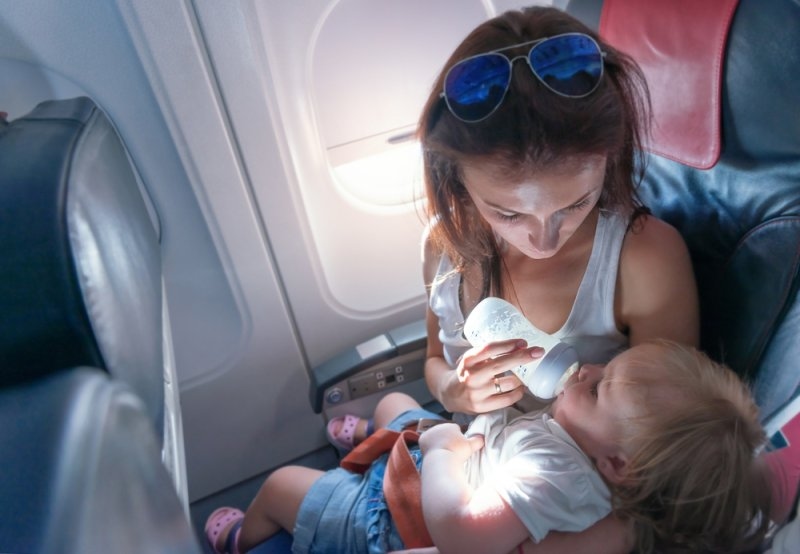
Use a Pacifier Or Bottle
According to Dr Claire McCarthy, M.D., of Boston Children's Hospital, "If you feed or breastfeed a baby during takeoff and first descent, it may assist with the ear pain." Pacifiers, bottles, and other sucking toys can all help relieve ear pressure and soothe a child. She further recommends trying out a Boppy pillow so that your baby may rest easier and nurse in comfort.
Know Your Medications
Doctors recommend giving your child half an hour's worth of Tylenol (at any age) or ibuprofen (after age six months) if they are experiencing ear discomfort or congestion prior to take-off. However, before giving your child any medication, it's a good idea to check with a physician.
Give It Some Time
It's true that sometimes nothing seems to help. Simply put, a youngster is overstimulated or overtired. Doctors advise that the babies "figure it out" for themselves. At such times, "we all have to be very empathetic toward parents who are doing their best."
Read Next: Toddler Sleep Regression Explained: Signs, Causes & Fixes
Conclusion
Parents flying with their babies have every reason to be stressed. No wonder they feel like the most exhausted, frazzled, and ill-prepared passengers on the plane. Understand what your baby needs and help pacify them with various toys, bottles, or distractions - such as a change of scenery.
In the end, don't fuss, enjoy every experience, and give it some time. Know that it's a common experience, and you are not alone. With these suggestions from ParentalMastery.com, we are sure that flying with a newborn will be a breeze.
Frequently Asked Questions
What do I need to pack when travelling with a baby?
Bring baby provisions and items needed for the baby's flight, including feeding equipment, nappies, clothing, books, toys, and relevant travel documents. A small, consolidated bag is required for ease of transport.
How far in advance do I need to arrive for air travel with a baby?
Having time for the baby's care and the baby's needs and ensuring a smooth take-off from the airport are benefits of arriving early at the airport when travelling with a baby and reduce parental concern.
Is a stroller permitted to fly with a baby?
Various air travel carriers have regulations on airline stroller policies while carrying a baby. Always verify the airline's regulations prior to flight for specific instructions on stroller policy.
How can a baby be made comfortable during air travel?
Parents should keep children at ease during the trip with child-suitable layered clothing while keeping favourite playthings like toys or books nearby. Breast milk, bottles, and other feeding provisions can aid in soothing a baby's ears if the baby does not take pacifiers on trips.
Can other airline passengers give consideration toward parents flying with a baby?
Parents also welcome consideration and understanding during travel when the child has been bothered, thus prompting parents to remain peaceful, as airline passengers may wish to offer parents an appropriate compliment or sympathetic assistance for the baby to relax while flying and for the parent with an infant.